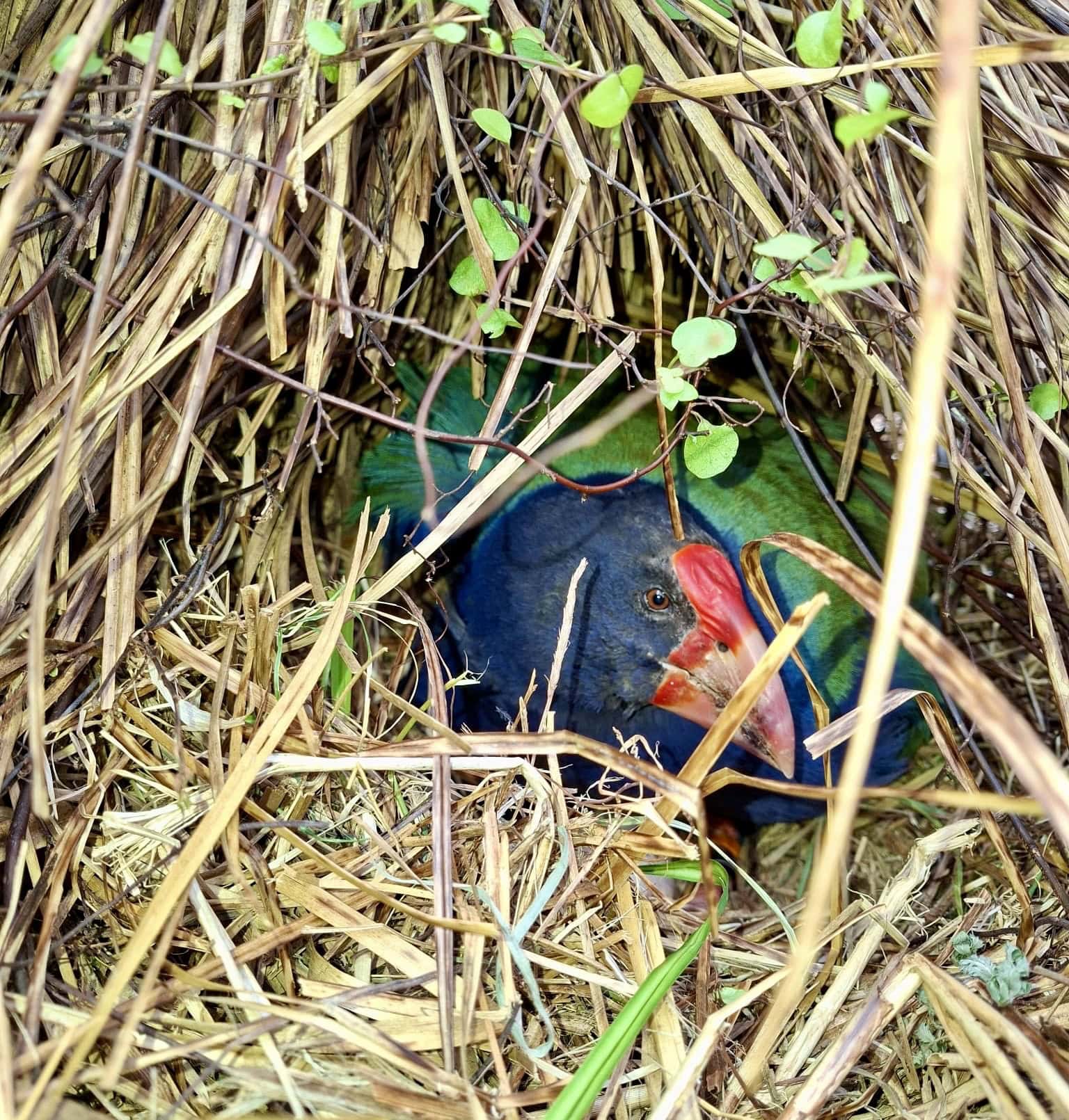
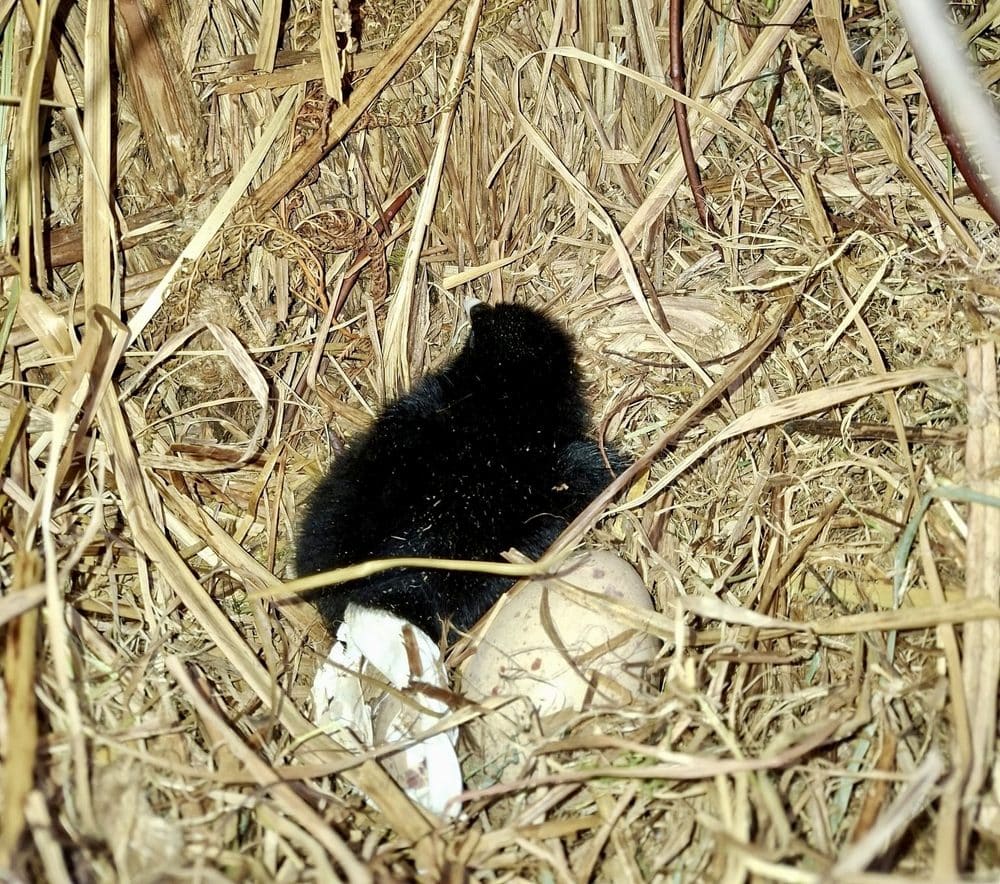
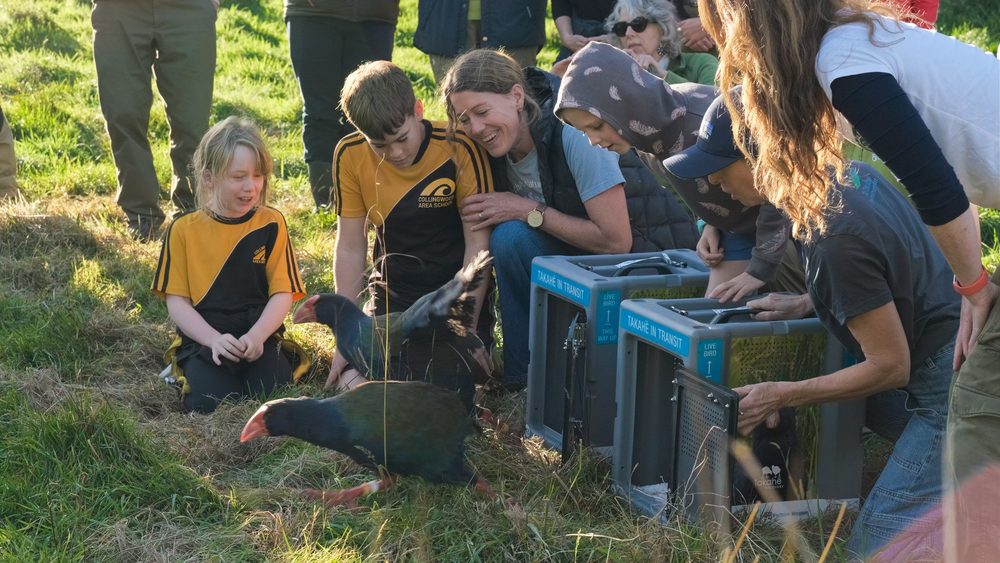
Just five months after eight takahē were translocated from Gouland Downs on the Heaphy Track to Pūponga Farm Park, the first tiny chick has hatched.
There’s also quite a lovely story behind this new arrival. These two adult takahē didn’t know each other when they arrived in May, but the DOC Takahē Recovery Team introduced them to each other in their new home. They settled in nicely and have just hatched their first chick!
We’re hearing reports from the field that the little one is doing well, and has recently been spotted out and about with its parents. It’s still early days for this little treasure, but for everyone who’s involved in bringing taonga species back to Onetahua, it’s a very special time.
Please give this little family space
As much as we’d love to catch a glimpse, the kindest thing we can do right now is leave this little family alone. The first few months are a vulnerable time for takahē chicks, even in well-protected places. It’s important the parents can look after their young without it being disturbed. If you’re in the area this summer and happen to encounter takahē, please enjoy them from a distance, don’t approach or follow them, and give them plenty of room. Let’s keep this little chick as safe as possible, while the DOC Takahē Recovery Team continues to monitor its progress.
The mahi that’s made this possible
Behind this happy news is a huge amount of work and collaboration from the Onetahua Restoration partners. A few months back, HealthPost Nature Trust volunteers were responsible for preparing the translocation area, alongside DOC Community Ranger Shane Rickets, whose role is jointly funded by HealthPost Nature Trust.
They built a smaller internal fence, behind the predator proof fence, and modified the farm troughs to prevent the birds from drowning. Shane knows this land better than most. He’s the former farm manager of Pūponga Farm Park, and has swapped looking after livestock for looking after takahē – a takahē farmer, you might say!
HealthPost Nature Trust has spent years trapping stoats and other mustelids around Wharariki to help make the area safer for native wildlife. And over the past two years, Pest Free Onetahua has expanded pest control across the entire Spit, targeting possums, rats, feral pigs and stoats. Farewell Spit Tours have also been trapping on the Spit since 2012, removing more than 2,000 pests, including over 500 stoats. The newly completed four-kilometre predator-resistant fence adds another layer of protection, while PFO’s targeted stoat control is now underway, with further predator control planned to help keep the takahē safe.
Together with Manawhenua ki Mohua and DOC, the project partners and community are working towards a vision of Onetahua as a place where native wildlife can thrive again. And although it’s still early days for this tiny takahē, it’s a brilliant result for everyone involved.