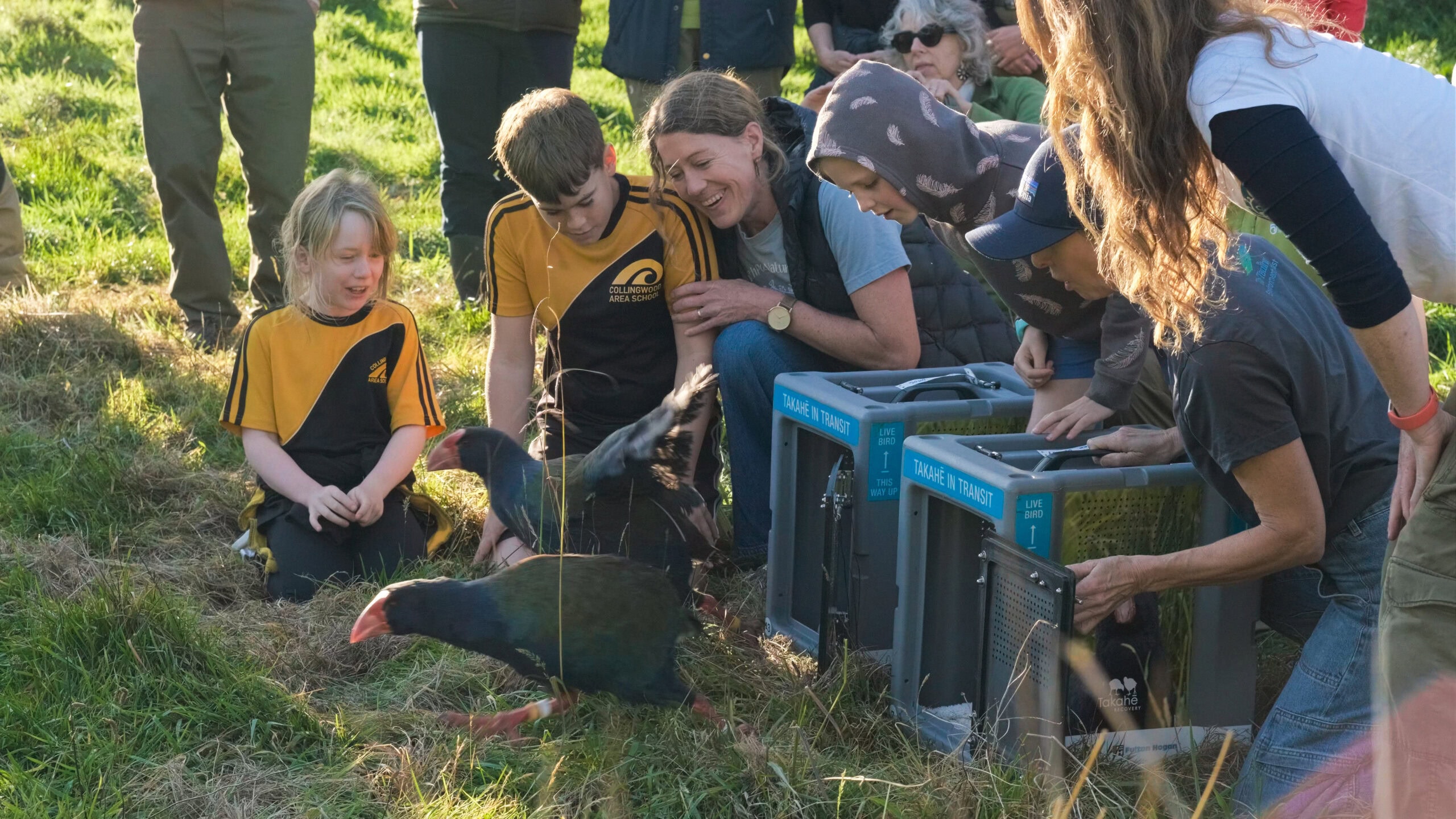
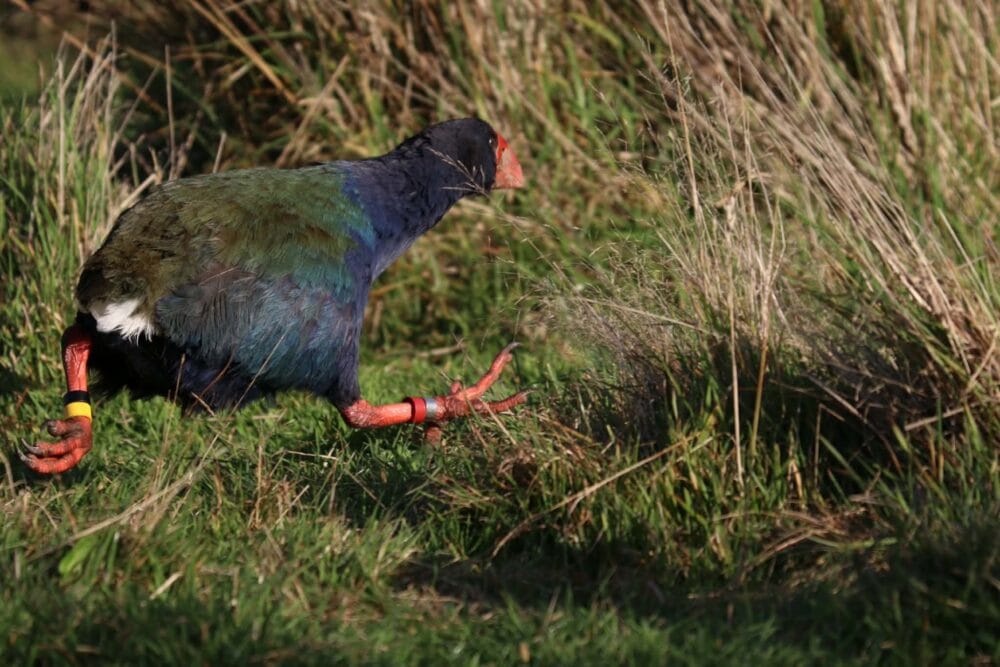
Takahē are roaming free at Onetahua/Farewell Spit, after being successfully relocated to one of Aotearoa’s most extraordinary coastal landscapes.
Last week, the Onetahua Restoration partners and supporters gathered to welcome eight takahē into their new home, following a year of intensive pest control and the completion of a predator-proof fence near the base of Farewell Spit.
For everyone involved, it was an emotional day. Watching the birds speed out of their transport crates and into the grasslands and rushes was pure joy, followed by a quiet understanding of how deeply significant this homecoming is.
Creating the right conditions for their arrival included hundreds of traps and bait stations, thousands of hours on the ground, countless predator checks, fence construction in challenging terrain and years of partnership and planning between iwi, Pest Free Onetahua, HealthPost Nature Trust and the Department of Conservation.
Over the past 12 months, Pest Free Onetahua has established an intensive pest control operation on Farewell Spit. The operation includes an extensive trap network, targeting possums, stoats and rats, backed up by the use of a thermal drone, specialist hunting teams and Argos, the project’s possum detection dog.
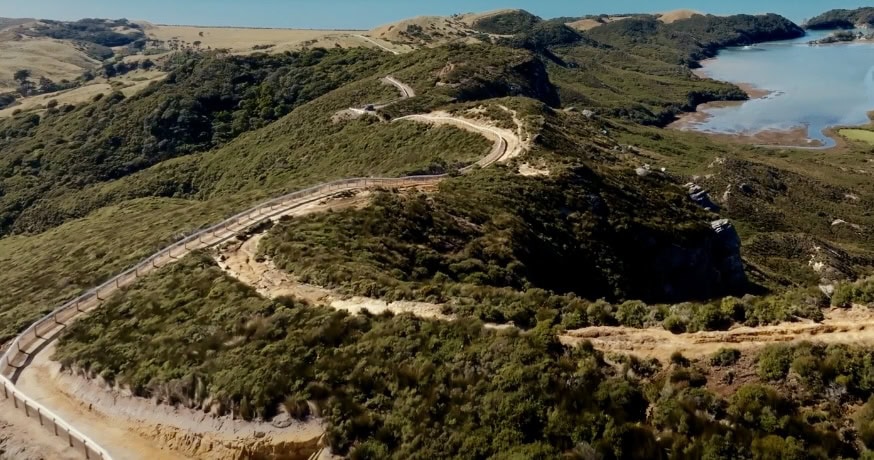
At the same time, the completion of a 4km predator-proof fence across the base of Farewell Spit by HealthPost Nature Trust has created a protected ‘low-predator number’ sanctuary covering 2,000 hectares and 50 kilometres of coastline.
Project Lead Corey Mosen says the takahē release reflects strong partnerships. “What a great outcome, to see takahē released at Triangle Flat shows what’s possible when we work together.”
“Underpinning the translocation are great teams, the fence construction, hundreds of traps, thousands of pests removed, heaps of volunteer hours, and a huge amount of trust and commitment from our funders and partners.” said Mosen.
For Pest Free Onetahua team member Raelene Mason (Ngāti Tama, Te Atiawa, Ngāti Rarua and Ngāti Whakaue), the translocation journey began in the early hours of release day. She joined the DOC team on the Gouland Downs, helping with the capture and health checks of the birds before their move to Golden Bay.
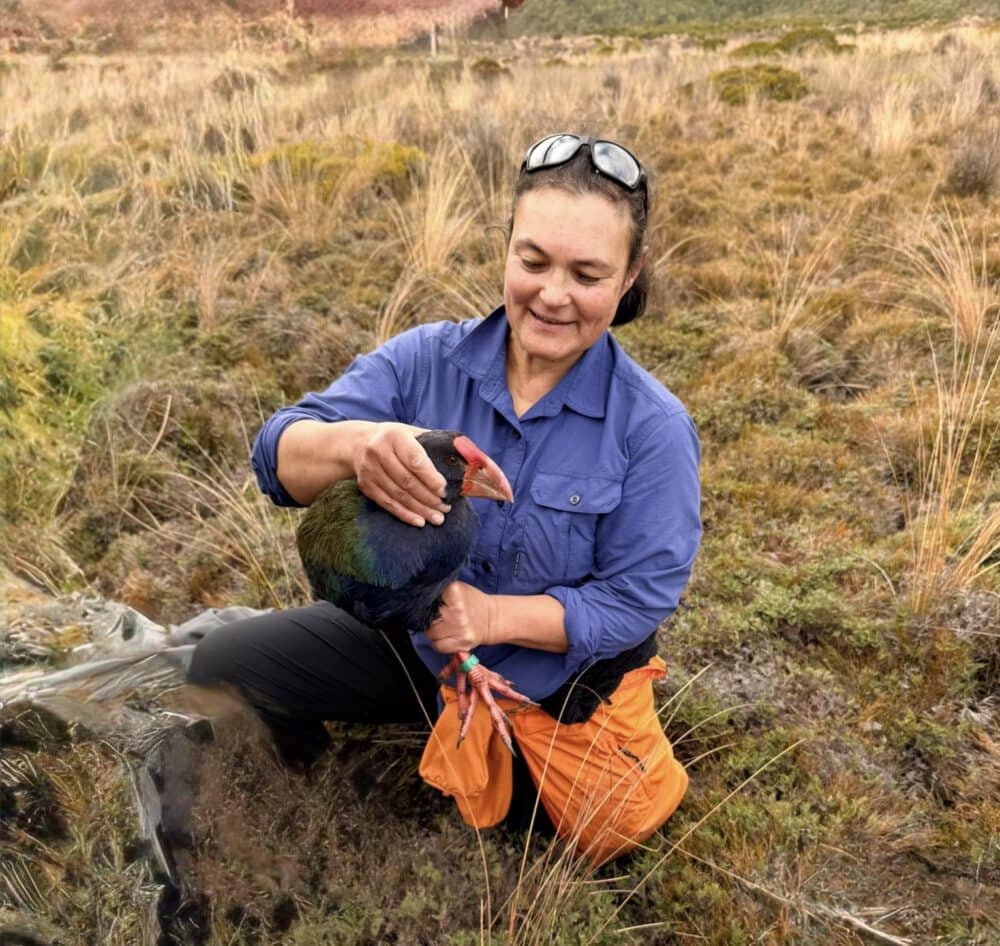
“I honestly felt so privileged and it was an honour to be there. I learnt a lot about these beautiful manu and can’t believe I got to do this very, very special work” says Mason.
“To help with the health checks and preparation on the Gouland Downs, then stand at Onetahua and watch them dash into their new home, was something I’ll never forget.”
The takahē were relocated from the Gouland Downs in Kahurangi National Park, where DOC has been trialling a wild population since 2018. While the site provided valuable learnings for the Takahē Recovery Programme, the birds did not thrive as well as hoped, with lower survival rates and challenges establishing a breeding population.
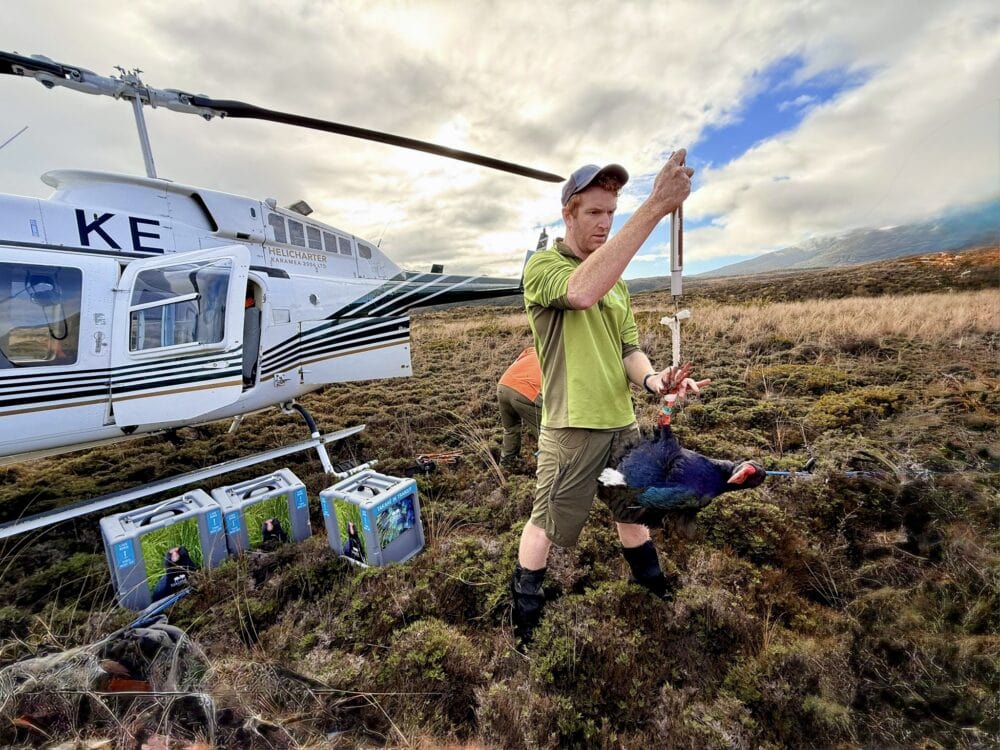
For DOC’s Takahē Recovery team, Onetahua offered an exciting opportunity. The newly completed predator-proof fence, combined with intensive pest control, has created a ‘low-predator’ sanctuary where the birds can be monitored closely while living in a wild environment. The area has abundant food and suitable habitat for takahē to establish territories and, hopefully, breed successfully.
Four pairs of takahē were transferred, including a newly paired male and female that DOC hopes will form a breeding pair. Close monitoring over the coming months will help determine how the birds settle, establish territories and make use of the habitat.
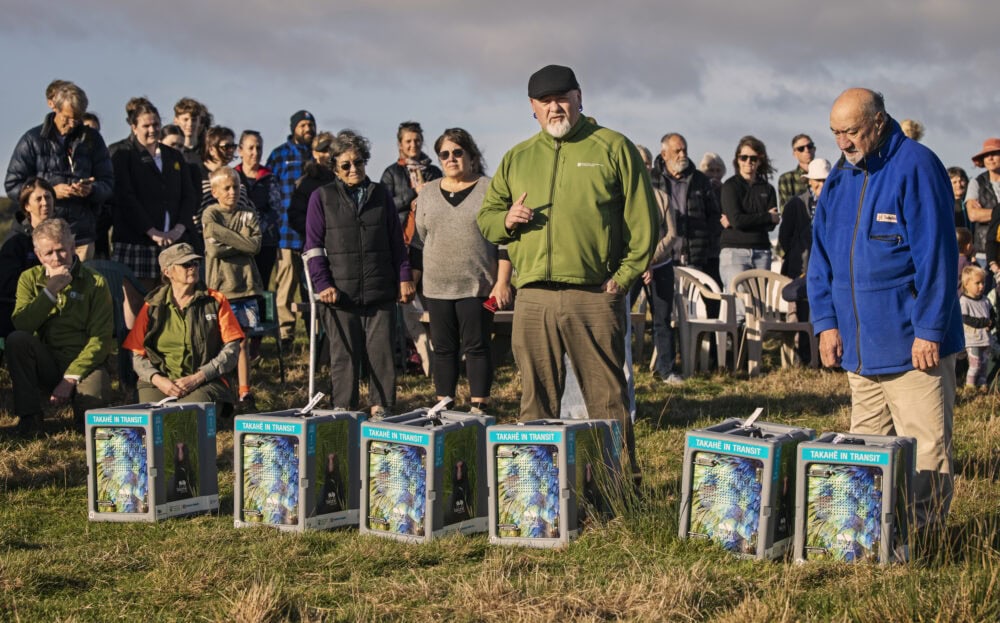
For Manawhenua ki Mohua (Ngāti Tama, Te Ātiawa and Ngāti Rārua), the return of takahē carries deep cultural significance. The takahē were gifted to Manawhenua ki Mohua by Ngāi Tahu in 2018 at a pōwhiri held at Onetahua Marae. Chair of Manawhenua ki Mohua, Margie Little, says and the project reflects cultural leadership, whakapapa connections, and kaitiakitanga.
“With the completion of the predator-proof fence and the extensive trapping going on, a decision was made to relocate the takahē to Pūponga/Onetahua,” says Little. “Our hopes are that the takahē will flourish in their new home and ensure their survival for future generations in Mohua.”
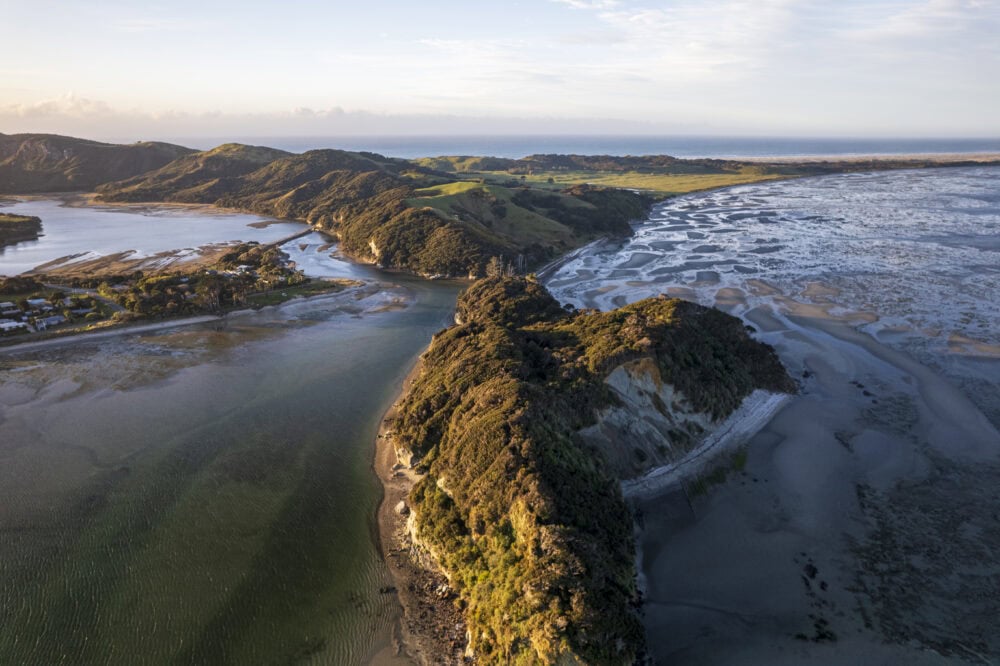
While predator control work at Farewell Spit continues, release day carried a strong sense of something very important for those attending. A taonga species had returned home to Onetahua, and it’s just the beginning of bringing nature back to this wāhi tapu.